
Published: 9 September 2026 | Last updated: 9 September 2026 | Reviewed by a travel documentation specialist with 8 years of experience in Japanese visa procedures.
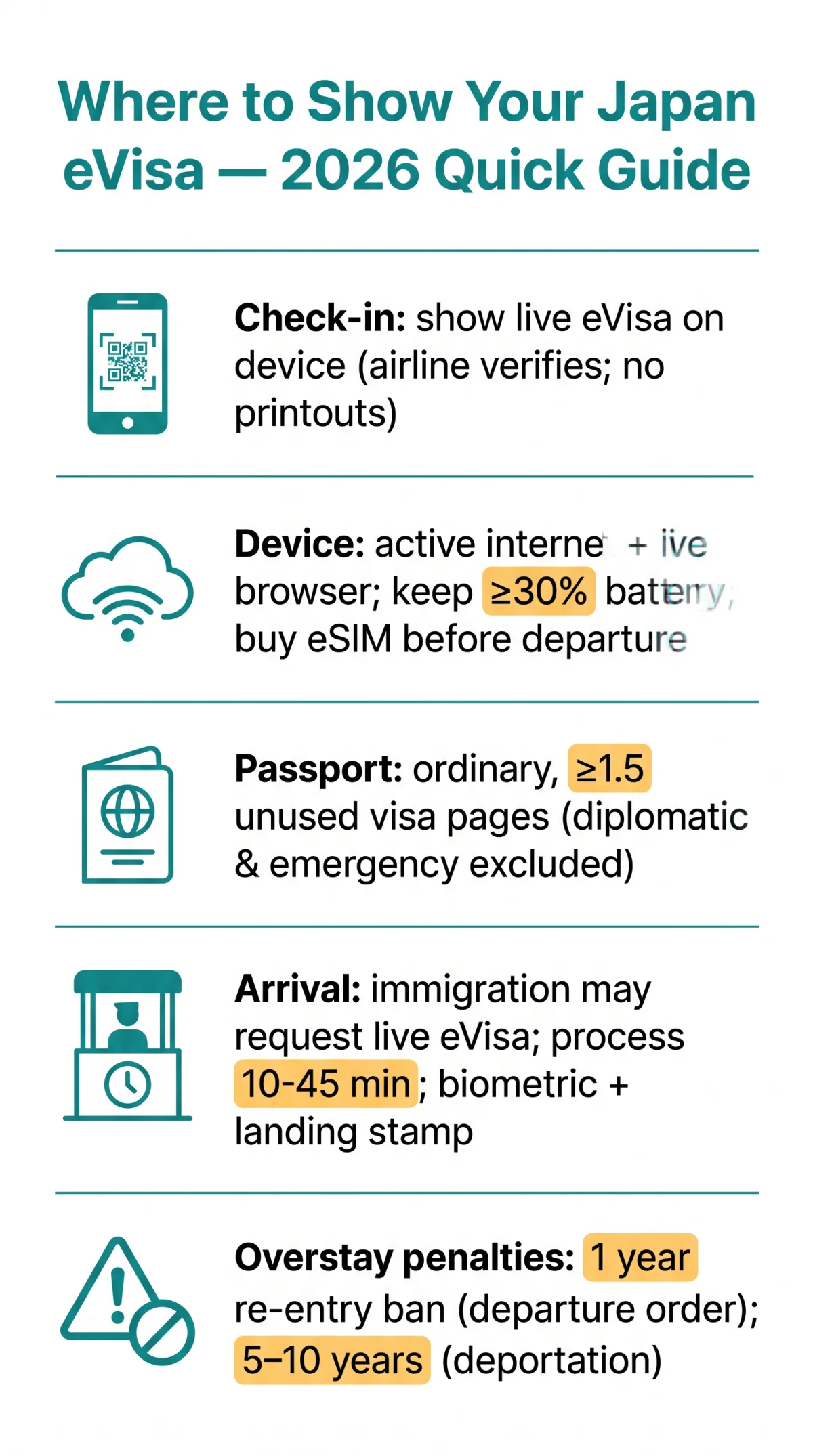
Where do I show my Japan eVisa at the airport? You must display your live eVisa issuance notice on a smartphone or tablet at the airline check-in counter before departure. Printed copies are not accepted. The notice requires an active internet connection and a live browser session. Your passport is also required at both check-in and Japanese immigration.
Where to Present Your Japan eVisa Issuance Notice at the Airport
You must present your eVisa issuance notice at the check-in counter before boarding. No physical visa sticker is affixed to your passport; the Japan eVisa is entirely electronic. Airline staff verify the live notice at departure. Upon arrival in Japan, you must show your Japan eVisa at the immigration counter if requested. Immigration officers primarily inspect your passport, but inspectors retain discretion to request live notice verification during border inspection.
Your passport must be an ordinary passport with at least 1.5 unused visa pages (one full visa page plus half a page for landing and departure stamps). Diplomatic, official, and emergency passports are excluded.
How to Display Your Japan eVisa at the Airport: Methods & Connectivity
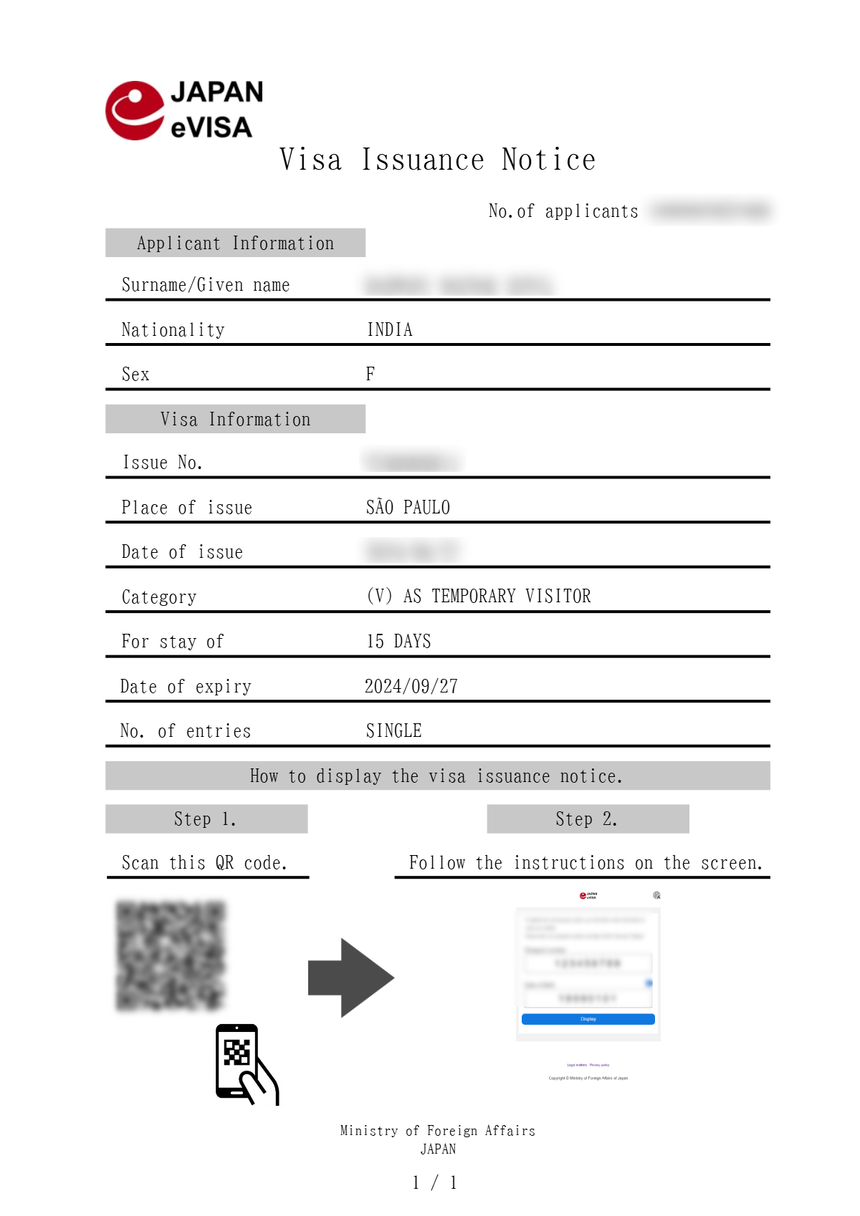
Show your Japan eVisa by scanning the QR code from the issuance notice (enter required info, click “Display”) or logging into the MOFA portal (click “Visa application list” then “Page for displaying visa issuance notice”). Both methods require an active internet connection; screenshots and printouts are rejected.
Two Display Methods
- QR code scan: Scan your Japan eVisa QR code at the kiosk, enter the necessary information, then click “Display.” The visa issuance notice appears on your device with a timer counting down at the top right, proving live validity.
- MOFA website login: Log in with your email address and password on the MOFA portal, click “Visa application list,” then “Page for displaying visa issuance notice.” Check the relevant person and click “Visa issuance notice (to display).” The same timer countdown appears at the top right.
Connectivity Checklist
- Before departure: purchase an eSIM and activate it according to your provider’s instructions. Some eSIMs activate immediately upon landing in Japan, but test the connection before arriving at the check-in counter. Airport rental Wi-Fi desks are located after immigration, making them useless for departure check-in display.
- Maintain a minimum 30% battery before reaching the check-in counter to display your eVisa on the mobile device.
- Free Wi-Fi is available at Narita and Haneda airports upon arrival.
What Happens at Japanese Border Control – Step by Step
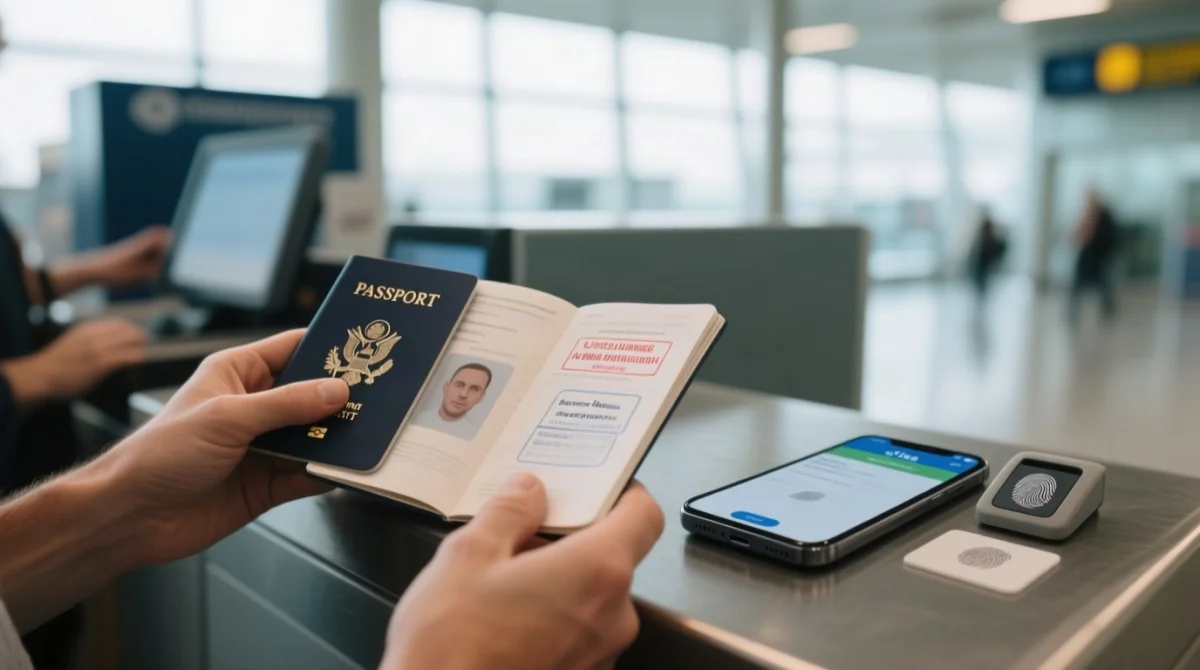
Japanese border control takes 10 to 45 minutes and involves passport presentation, live Japan eVisa verification, biometric capture, and a landing permission stamp.
Proceed to immigration hall
After disembarking, follow signs for foreign nationals to the immigration hall and queue at a counter.
Present your passport
Present the biometric page to the immigration officer. Keep your eVisa notice accessible on your device for secondary verification if requested.
Answer questions
Respond to the officer regarding purpose of visit, accommodation details, return flight, and length of stay.
Biometric verification
A digital photo is taken and a fingerprint scan is completed. You may need to submit your eVisa notice at the biometric checkpoint if requested.
Landing permission stamp
A stamp is affixed to your passport showing your permitted stay (15, 30, or 90 days). Officers may grant fewer days than the eVisa maximum. Verify the stamped period immediately before exiting.
At departure check-in, airline staff verify your live eVisa issuance notice. At arrival immigration, you must verify your eVisa with passport control. Provide your eVisa details during border inspection if requested. Visit Japan Web QR codes, issued by the Immigration Services Agency, are presented separately at arrival customs.
Visit Japan Web vs eVisa Issuance Notice – Don’t Confuse Them
The eVisa issuance notice (MOFA) is shown at departure check-in, while Visit Japan Web QR codes (Immigration Services Agency) are presented at arrival immigration. They are separate systems with separate QR codes used at different checkpoints.
| Feature | eVisa Issuance Notice | Visit Japan Web |
|---|---|---|
| Issuing body | Ministry of Foreign Affairs (MOFA) | Immigration Services Agency (ISA) |
| Purpose | Proves valid visa | Immigration pre-clearance + customs declaration |
| When shown | Departure check-in | Arrival immigration & customs |
| To whom | Airline staff | Immigration officer + customs officer |
| Format | Live browser display with countdown timer | QR code (static, pre-generated) |
Common error: showing Visit Japan Web at departure check-in. You need your Japan eVisa at Heathrow check-in, then Visit Japan Web at Narita immigration. Confirm your eVisa status at the pre-clearance desk before boarding.
Japan eVisa Overstay Warnings: Penalties You Need to Know in 2026
Overstaying a Japan eVisa triggers a 1-year re-entry ban under a departure order or a 5 to 10-year ban under formal deportation. Exceeding the permitted stay triggers penalties under the Immigration Control and Refugee Recognition Act. The table below shows escalation.
| Overstay Situation | Consequence | Re-Entry Ban | Additional Risks |
|---|---|---|---|
| Voluntary self-surrender | Departure order | 1 year | Must leave Japan within set timeframe |
| Apprehended by authorities | Formal deportation | 5 to 10 years | Criminal prosecution possible |
| Prolonged overstay | Criminal charges | 5 to 10 years | Negative impact on global visa applications |
Travellers may avoid formal deportation by voluntarily reporting to a regional immigration bureau, which qualifies for departure order status rather than arrest. If your Japan eVisa allows 90 days but you book a 95-day trip, you risk a 1-year re-entry ban. Check your Japan eVisa validity before showing it at airport security.
Japan eVisa Airport Entry & Border Control FAQ
Can I use automated e-gates with my Japan eVisa?
Automated gates are available at some Japanese airports. However, standard border control requires presenting your passport to an immigration officer, who may request your eVisa issuance notice for secondary verification.
Do I need an internet connection to show my Japan eVisa at the airport?
Yes, an active internet connection is required to display your eVisa issuance notice live. Airport rental Wi-Fi desks are located after immigration, making them useless for departure check-in. Purchase an eSIM before departure or ensure sufficient data roaming.
What happens if my phone battery dies at the check-in counter?
Maintain a minimum 30% battery before reaching the check-in counter. If your device fails, airline staff may offer assistance. Some airports have terminal charging stations, but you are responsible for ensuring your device can display the live timer countdown.
What documents do I need alongside my Japan eVisa at immigration?
You must present your ordinary passport with at least 1.5 unused visa pages. The passport is the primary document inspected at arrival immigration. Keep your eVisa issuance notice available on your device as a contingency.
Does the airline check my eVisa again at the boarding gate?
Primary verification occurs at the check-in counter. Secondary re-verification at the boarding gate is not standard, but airlines retain the right to inspect travel documents again. Keep your device charged until you board.
I’m transiting through Japan. Do I need to show my eVisa at transit?
If transiting airside without passing through Japanese border control, you do not need to present your eVisa. However, if you leave the transit area to pass through immigration, you must display your live eVisa notice.
How do I find my eVisa issuance notice in my email?
Your eVisa approval email contains the link or QR code needed to access your issuance notice. Log in to the MOFA website or scan the provided QR code to display the notice live.
What is the difference between the Japan eVisa and a traditional visa sticker?
The Japan eVisa is entirely electronic. No physical visa sticker is affixed to your passport. You must display the live issuance notice on a digital device at the check-in counter.
UK citizens. Are there specific Japan eVisa entry requirements in 2026?
UK travellers must hold an ordinary passport. The Japan eVisa is a single-entry short-term stay visa permitting tourism for up to 90 days. The visa is valid for 3 months and cannot be extended.
What type of visa is the Japan eVisa?
The Japan eVisa is a single-entry short-term stay visa for tourism purposes only. The maximum duration of stay is up to 90 days for UK passport holders. The visa validity period is 3 months, and it invalidates upon applying for landing or upon expiry. Extensions are not possible.
Visa procedures and penalties are subject to change. Always verify with the MOFA eVisa FAQ page (last updated November 2024), the Embassy of Japan in the UK (FAQ published March 2026), or the MOFA visa issuance notice guide (PDF) before travel. The Ministry of Foreign Affairs of Japan is located at 2-2-1 Kasumigaseki, Chiyoda-ku, Tokyo 100-8919, Japan.